|
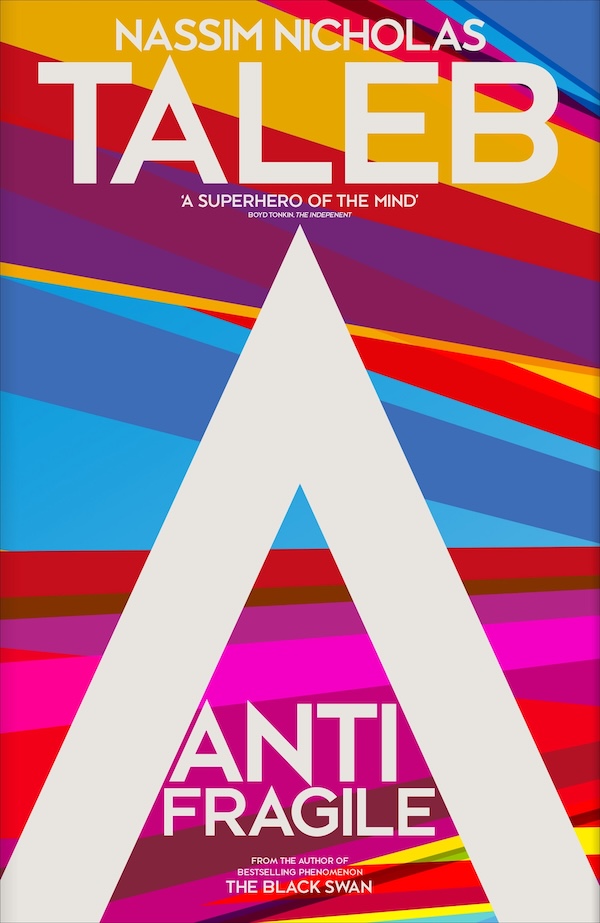
Antifragile, by Nassim Nicholas Taleb
Just as bones strengthen under stress, some things in life actually need volatility, pressure, and chaos to grow. Taleb calls this quality antifragility, and it’s not just about surviving the unexpected, but thriving because of it.
This book is part philosophy, part street-smart survival guide for modern life, with applications to investing, work, health, and decision-making. Here’s a (non-fragile) summary:
Core Concepts:
- Definition: Antifragile things benefit more from disorder than they lose; they gain from randomness.
- The Triad: Everything falls somewhere on a scale: fragile, robust, or antifragile.
- Focus on Fragility: We can’t predict rare events, but we can identify what’s vulnerable to them.
- Measure, don’t forecast: It’s more useful to assess how something breaks than to guess when it will.
Nature of Antifragility:
- Suppressing volatility in antifragile systems (like people, markets, or ideas) actually weakens them.
- Removing unnecessary complexity makes systems stronger; addition often breeds fragility.
- Comfort is dangerous: Lack of challenge erodes the best individuals and institutions. •
- Effort, both mental and physical, leads to higher performance.
- Evolution is the ultimate antifragile process: messy, random, and wildly effective.
Misconceptions & Illusions:
- Randomness isn’t the enemy. Believing it is makes you fragile.
- Systems break when we artificially smooth out volatility (see: finance, medicine, your emotions).
- Daily variability helps strengthen people and systems.
- True stability comes from exposure, not insulation.
- The Turkey Problem: Just because something has never gone wrong doesn’t mean it won’t.
Practical Approaches:
- Do more, theorise less. Action reveals fragility faster than thought experiments.
- Time is the great filter. If something lasts, it’s probably antifragile.
- Barbell strategy: Mix ultra-safe options with high-risk/high-reward one, avoid the over-optimised middle.
- Optionality beats prediction. You don’t need a perfect understanding to benefit from smart choices.
Decision-Making Wisdom:
- Experimenting is better than over-planning. Iteration builds resilience. Rigid plans don’t.
- Antifragile choices often have hidden advantages. The best of them get even better under stress.
- Avoiding stupid mistakes is more powerful than chasing brilliance.
- Great decisions rarely need more than one solid reason.
- The longest-surviving ideas, books, and technologies tend to be the most robust. (See: philosophy, cast iron pans, naps.)
Life Applications:
- Via negativa: Subtracting harmful things is often more effective than adding new ones.
- Eat less, move more, and avoid overprocessed everything.
- Be suspicious of anything with a huge marketing budget.
- Apply antifragility to everything: your investments, your diet, your work, your relationships.
Whether you’re investing, eating, working, or just trying not to fall apart in modern life, Antifragile offers a toolkit for navigating chaos like a pro.
Enjoy.
|